





Why An Overloaded Van And Van Racking Could Cost You Big
As a tradesperson, your van is the backbone of your business. It carries your tools, materials, and sometimes even your reputation. But loading up too much can put you on the wrong side of the law - and the numbers from the Driver and Vehicle Standards Agency (DVSA) show the problem is getting worse.
In the UK’s 2024/25 financial year, there were 208 convictions for overloaded light goods vehicles (LGVs), resulting in fines totalling nearly £400,000. That’s up from 187 convictions the year before - proof that enforcement is tightening. And these figures don’t even include additional fines for insecure loads, which often come hand-in-hand with overloading.
Here’s what you need to know about overloading, the risks, and how you can avoid becoming part of next year’s statistics.
The Real Cost of Overloading
Overloading isn’t just a box-ticking issue - it carries serious financial, legal, and operational consequences.
1. Fines That Add Up Fast
The DVSA uses a sliding scale of penalties:
|
Fixed Penalty Notices £100, £200, or £300, depending on how far over the weight limit you are. |
Court Summons Issued if you’re more than 30% overloaded. |
Unlimited Fines If your case goes to Magistrates’ Court, there’s no upper limit on what you can be fined. |
In some cases, your van can even be immobilised on the spot until the excess weight is removed - meaning you can’t work until it’s sorted.
2. Points on Your Licence
Severe or repeated offences can result in penalty points on your licence. Rack up too many, and you could lose your licence altogether - effectively putting you out of business if driving is essential to your trade.
3. Vehicle Safety Risks
Overloading affects everything from braking distance to steering control. It increases wear on tyres, suspension, and brakes, leading to higher maintenance costs and a greater risk of accidents.
4. Insurance Problems
If you’re involved in an accident while overloaded, your insurance provider may refuse to pay out. That leaves you liable for repairs, replacement costs, and any damage caused to other vehicles or property.
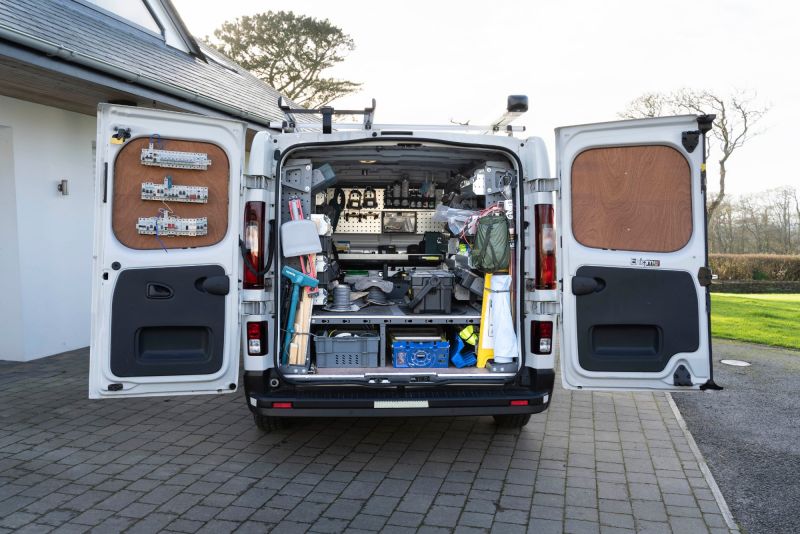
How to Avoid Overloading
Avoiding overloading starts with knowing your van’s Maximum Authorised Mass (MAM) - the legal weight limit for your vehicle. This includes the van itself, fuel, driver, passengers, tools, and materials.
Here are some practical steps you can take:
|
Regularly Check Your Load Weight → Use a weighbridge if you’re unsure.
Distribute Weight Evenly → Uneven loads affect handling and can make the van less safe. |
Remove What You Don’t Need → Keep only the tools and materials required for the day’s jobs in the van.
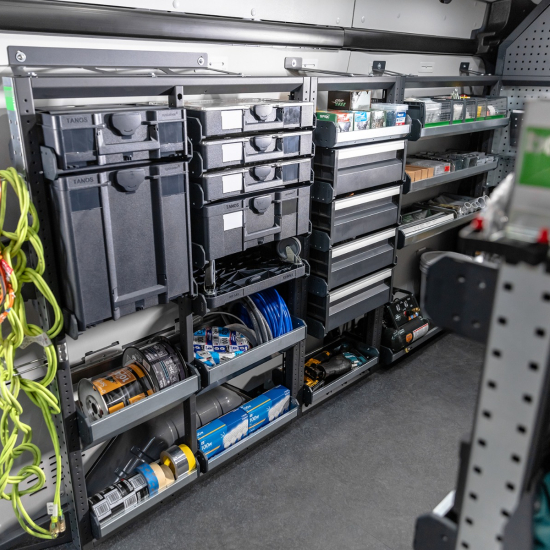
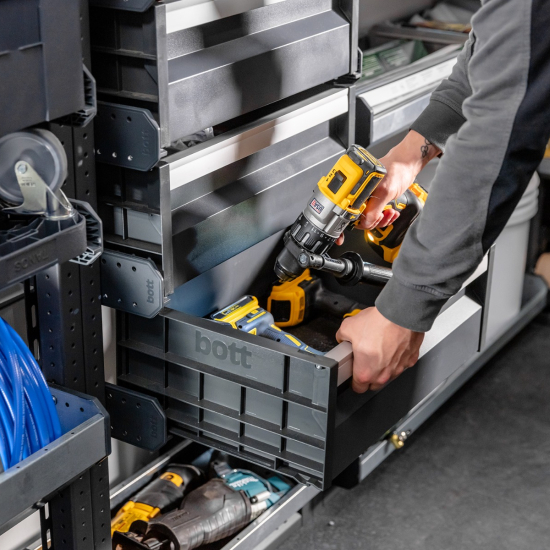
Use Lightweight Van Racking → Heavy van racking eats into your payload capacity before you even load a single tool. |
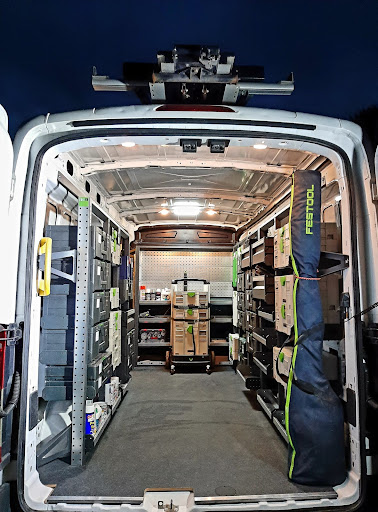
The Role of Lightweight Van Racking
One of the easiest ways to maximise your payload capacity is by reducing the weight of your racking. Lightweight racking gives you strength and organisation without wasting valuable kilograms.
This means:
✔ More payload available for tools and materials
✔ Better fuel efficiency and reduced running costs
✔ A lower risk of accidentally tipping over the legal weight limit
In other words, the right storage solution helps keep you compliant, efficient, and safe.
Use our van racking configurator to find a custom solution for your vehicle.
Overloading your van is more than just a costly mistake - it’s a safety risk, a legal liability, and a potential business killer. With convictions and fines rising year-on-year, now is the time to take payload management seriously.
By choosing lightweight van racking, checking your loads regularly, and staying within your van’s MAM, you can avoid fines, protect your licence, and keep your business running smoothly.
Ready to master space and time?
Design your ideal mobile workspace with our easy-to-use online configurator. Tailored to your van, built for your trade. Select your vehicle & start configuring